
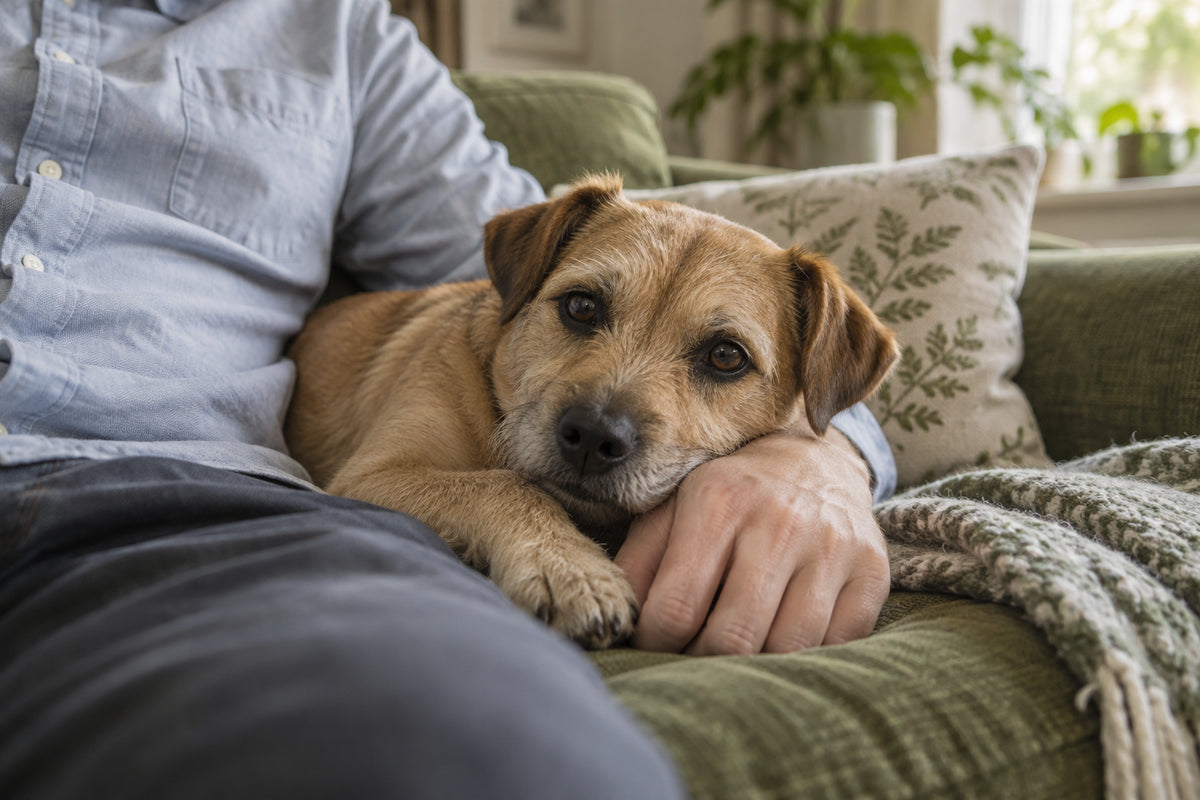
You know your dog’s usual pace around the house. So when they keep getting up, watch the doorway or struggle to settle, it’s natural to wonder what has changed.
Signs of anxiety in dogs can include pacing, trembling, panting when they are not hot, hiding and changes in appetite or behaviour. These signs need context: pain and illness can look similar, and one behaviour alone is not a diagnosis. Start by noticing patterns, reducing immediate pressure and speaking to your vet about new or persistent changes.
What can dog anxiety look like?
Some signs are obvious. Others are easy to miss. The AAHA guidance on anxiety and distress includes restlessness, changes in posture, panting, trembling and avoidance. Watch the whole dog rather than a single signal.
- Movement: repeated pacing or difficulty getting comfortable.
- Body language: a lowered posture, shaking or repeatedly turning away.
- Breathing: panting that does not fit the temperature or recent exercise.
- Social choices: hiding, withdrawing or seeking more contact than usual.
Your job is not to decide which label fits fastest. It is to describe what you actually see. “Walked between the sofa and front door six times after the doorbell” is more useful than “being difficult again”.
Notice when it happens, not just what happens
Keep a simple diary. Record the time, what happened beforehand, what your dog did and how long it took them to return to their usual behaviour. Include changes in the household, visitors and nearby noise.
For example, a dog who becomes restless after every delivery needs a different conversation from one who is unsettled throughout the day. Bring those observations to your vet. Short videos can help, provided recording does not mean prolonging a situation your dog finds difficult.
Could it be separation anxiety?
If the behaviour happens specifically when your dog is alone or away from someone, discuss a separation-related problem with your vet. Barking, drooling, destruction or toileting can occur, but quiet withdrawal can also be missed.
PDSA’s separation guidance explains that different emotions can underlie these problems. A pet camera may reveal what happens when you leave. Do not deliberately leave your dog distressed to collect footage, and do not assume a toy will resolve the problem. Seek a vet-led plan and qualified behaviour support.
Build a comfort plan around your dog
Think in terms of a specific moment and a realistic outcome. Instead of “make my dog calm”, your starting point might be “help them rest somewhere away from the busy doorway”.
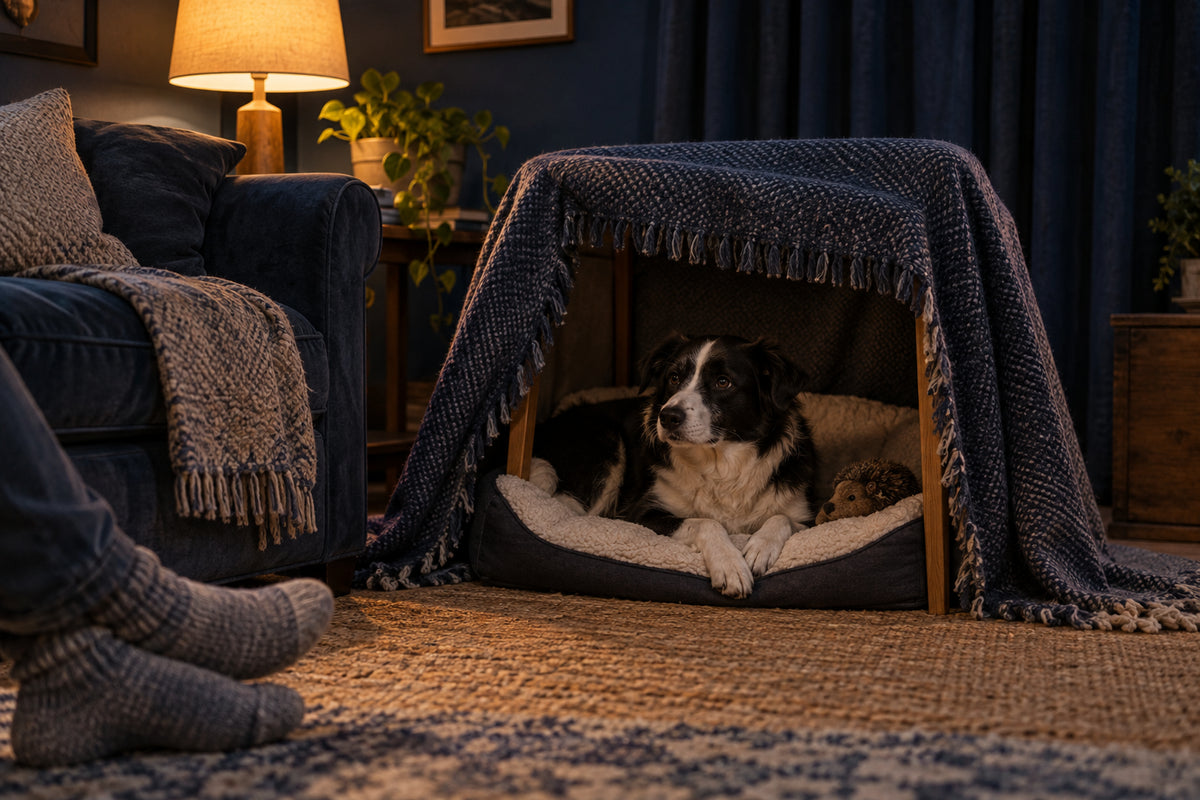
A comfortable resting option such as the Soft Nest Calming Donut Pet Bed gives you one way to arrange that space. Place it where your dog already chooses to rest, with room to move away. A bed is an invitation, not somewhere they must stay.
If your dog enjoys wearing comfort accessories, explore the fit and use guidance for our Comfort Hug Dog Calming Jacket or Everyday Calm Collars for Dogs & Cats. Check suitability before choosing. These products belong within a wider care plan, not in place of understanding the cause.
For a dog who is comfortable and interested in food, a gentle activity may also have a place. Our snuffle mat, lick mat and puzzle feeder comparison helps you choose by the activity your dog enjoys, without assuming every restless dog needs the same thing.
When should you contact your vet?
Arrange veterinary advice if the behaviour is new, recurring, worsening or affecting everyday life. Sudden changes deserve attention rather than an anxiety assumption. If your dog appears seriously unwell, is injured or has breathing difficulties, seek urgent veterinary help.
Frequently asked questions
Is my dog anxious or just bored?
You cannot reliably tell from one behaviour. Note the circumstances and any other changes. Enjoying a game is useful information, but it does not rule out discomfort or an underlying problem.
Why is my dog pacing and panting at night?
There can be several explanations, including discomfort. New or repeated night-time restlessness warrants veterinary advice rather than simply buying a calming accessory.
Can a calming bed cure separation anxiety?
No. A comfortable bed can be part of the environment you offer, but separation-related distress needs an individual assessment and care plan.
Small steps. Softer days. Understanding what your dog is communicating is the most useful place to begin. If noise is the main trigger, read our guide to helping dogs during fireworks.
Written by Closebound. General information, not a diagnosis or individual veterinary advice. Guidance sources checked in September 2026; no veterinary review of this article is claimed.

Leave a comment
This site is protected by hCaptcha and the hCaptcha Privacy Policy and Terms of Service apply.