
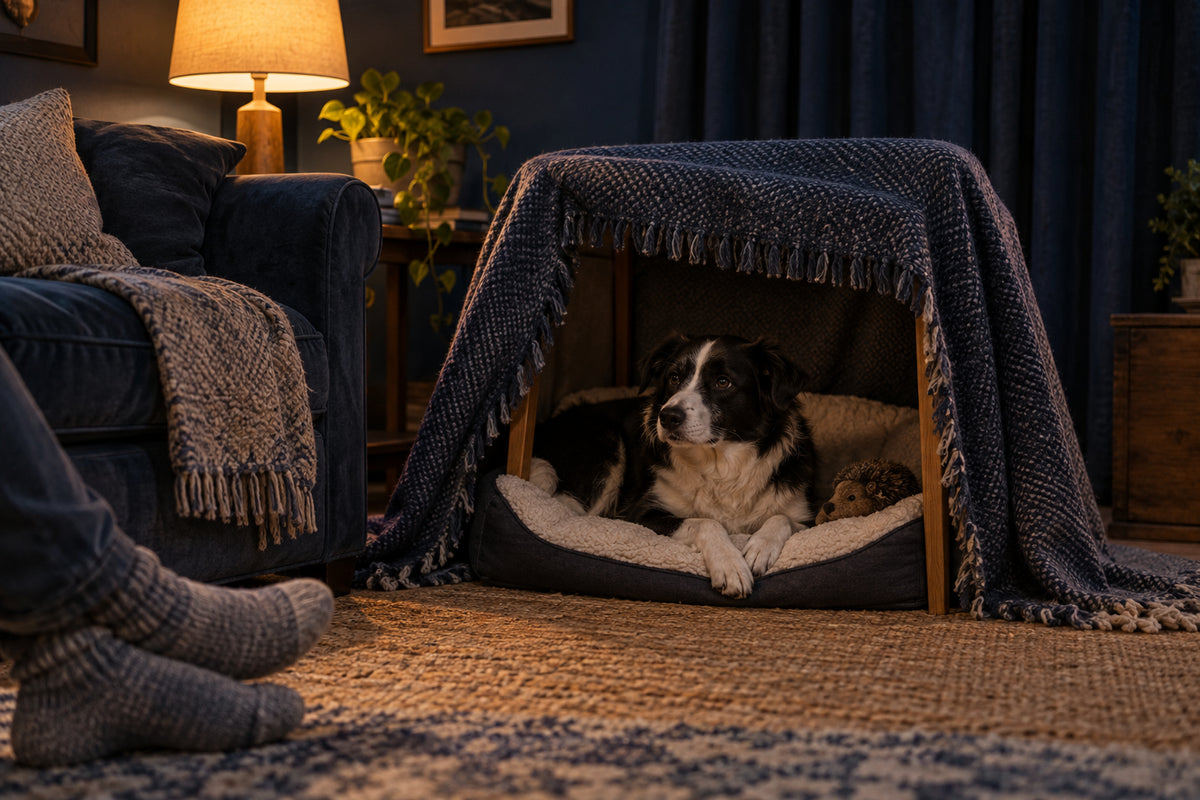
For you, Bonfire Night might mean a date in the diary. For your dog, it can mean an unfamiliar bang with no obvious explanation.
If you are searching for how to calm a dog during fireworks, start with preparation rather than a last-minute purchase. Plan a familiar retreat, reduce exposure to flashes and noise, and contact your vet ahead of time if your dog has previously shown significant fear. Calming accessories can be part of that plan, but no product makes fireworks harmless or guarantees a relaxed dog.
Recognise fireworks anxiety before it escalates
Fear can show up as shaking, panting, pacing, hiding or attempts to escape. Some dogs become unusually clingy; others withdraw. Cornell’s veterinary guidance on noise fear describes this range and recommends professional help when fear is difficult to manage.
If you are unsure what is normal for your dog, use our guide to signs of anxiety in dogs to organise your observations. Take notes about previous events so you can explain what happened, rather than trying to remember everything during a consultation.
Before the evening: make the plan familiar
Choose a retreat your dog can approach and leave freely. Add familiar bedding and introduce it on ordinary quiet days, not only when the first bangs start.
A useful way to organise your preparations is to make a short household checklist: which room will you use, who will stay nearby, and where are the things your dog already knows? Put that plan somewhere everyone can find it. The aim is fewer hurried decisions when your attention needs to be on your pet.
Our Soft Nest Calming Donut Pet Bed is a comfort option for that resting area. Use your dog’s preferences to decide the location. If they choose another safe spot, the plan can adapt to them.
On fireworks night: reduce pressure and offer reassurance
PDSA’s fireworks advice recommends walking before dark, closing curtains and using familiar background sound at a comfortable volume. Keep doors secure, check identification details and supervise essential toilet trips on a lead. Offer reassurance if your dog seeks you out, or space if they prefer to retreat. Never punish fear.
For a noise-sensitive dog, an activity is optional. If they do not want food or interaction, do not keep presenting it as a test they should pass. Their choice tells you something about how they are coping.
Where can calming jackets, collars and ear wraps fit?
A compression-style jacket can provide gentle reassuring pressure for dogs comfortable wearing one. PDSA also cautions that a dog who feels restricted may become more distressed. Introduce any new accessory in a quiet setting and follow its fitting guidance.
The Comfort Hug Dog Calming Jacket offers this style of comfort support. The Quiet Comfort Dog Calming Ear Wrap offers noise-reducing support, not complete silence. A dog calming collar is another option to consider within your wider plan. Read each listing’s suitability and use instructions rather than assuming the accessories are interchangeable.
Make your decision before the event. Ask: does my dog accept the fit, can I use it as instructed, and what will I do if they dislike it? Having that answer matters more than adding every possible aid at once.
What if my dog is still frightened?
Stay focused on safety and contact your vet about significant fear or difficulty recovering. Cornell notes that some dogs need a combination of behaviour support and prescribed medication. Do not use human medicines or another pet’s prescription.
Longer-term sound work should happen away from the event, with appropriate guidance and without provoking fear. Fireworks night is not the moment to turn up recordings and hope your dog gets used to them.
Frequently asked questions
Should I comfort my dog during fireworks?
Yes, if they seek reassurance. Let them choose contact or a safe retreat rather than forcing either one.
Do dog ear wraps block all fireworks noise?
No. Noise-reducing support is not silence, and it does not replace a secure environment or a vet-led plan for severe fear.
What if my dog will not eat?
Do not force a food activity. Refusing food can accompany fear. Prioritise their environment and seek advice if their distress is significant or they seem unwell.
The goal is not a perfect evening. It is a more thoughtful one. Prepare around the dog you know, with familiar choices and help available when you need it. For quieter-day activities, explore our dog enrichment comparison.
Written by Closebound. General information, not individual veterinary advice. Guidance sources checked in September 2026; no veterinary review of this article is claimed.

Leave a comment
This site is protected by hCaptcha and the hCaptcha Privacy Policy and Terms of Service apply.